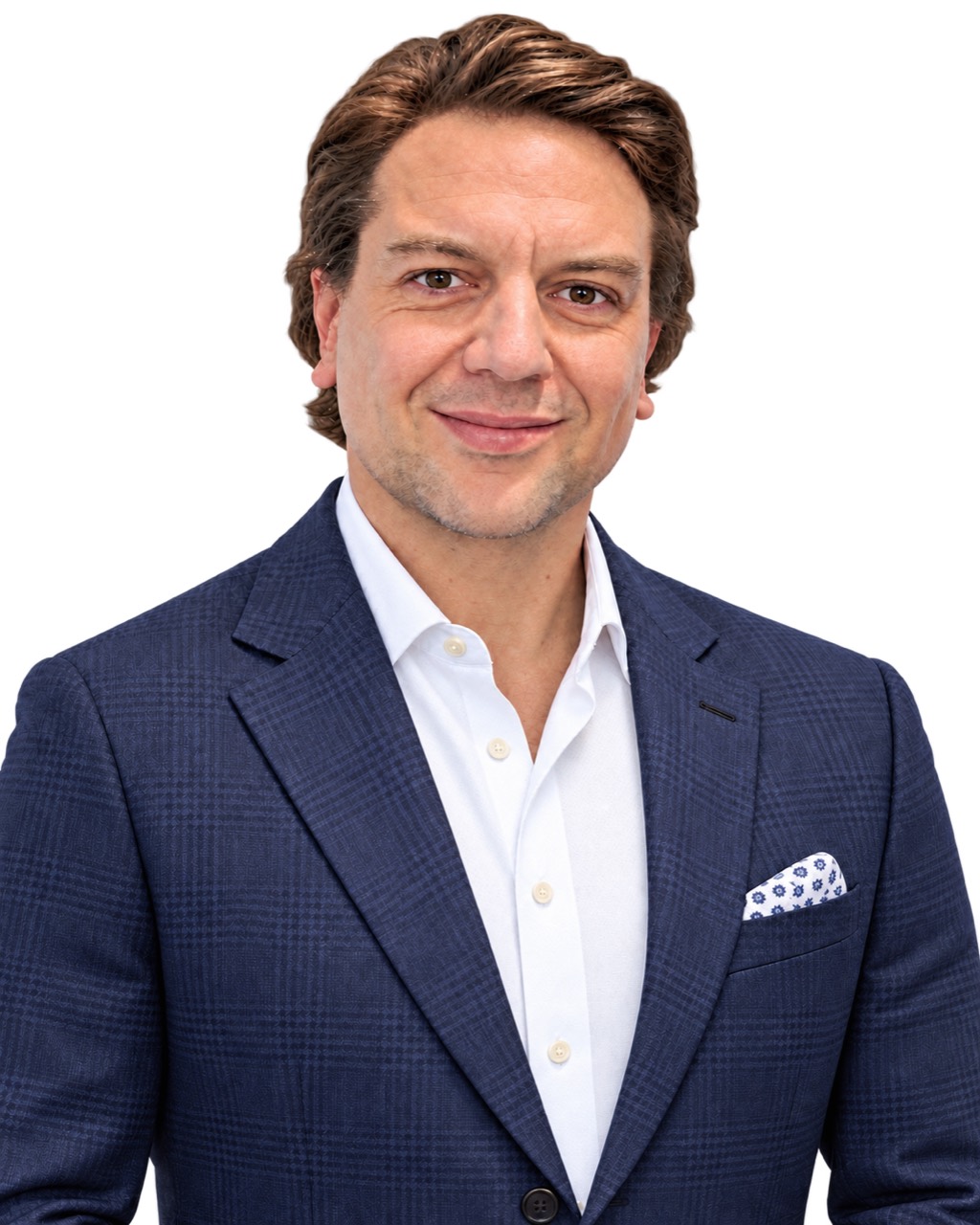
I figure out why systems break, fix them, and monetize the fix.
I compose and play music with stringed instruments, some of them electric. On weekends I try to prove theorems that machines will accept. I live in Benicia, California with my family and two dogs. We take sunset cruises on our boat.
Every system I've worked with breaks the same way. The assumptions underneath it are invisible until they fail. Your commute is fast until construction starts. A business grows by word of mouth and then one day it doesn't. The same musical foundation that made blues, jazz, and rock and roll lively became a formula. It stopped being interesting in the late 90's, and rock and roll is dead.
A change is when assumptions no longer hold for a system.
Most are invisible until you try to formalize them. I work in Lean 4, where you can't hand-wave. A proof assistant forces every assumption into the open. Most of them turn out to be wrong in places you didn't know to check.
Most optimization assumes you know what you're looking for and that the landscape is smooth. Both assumptions fail on the problems I find interesting. I'm building a GPU-accelerated optimization framework that uses automated research to evolve search algorithms for hard landscapes, and a synthetic data framework that explores data spaces and curates training artifacts without assuming the target distribution upfront. Neither fully answers how you search when you don't know what's worth finding. The assumptions about what to optimize are themselves the thing that needs to break.
Some fields don't have stable answers and never will. Regulatory intelligence is one. I build systems for that problem at Infodesk, which means building software that is honest about what it doesn't know. (Spiro et al., 1988)
I also build libraries when existing ones assume too much: a UI system for Gleam, a TypeScript-to-Python bridge, a graph database in Rust.
Every org chart is an implicit theory about where coordination is most expensive. Most companies never look at it that way. The question gets stranger when the agents doing the coordinating stop being exclusively human. (Coase, 1937)
I compose and play guitar, lap steel, and dobro. Modern prog and art rock: long forms, odd meters, textural playing. I've played local shows. The refusal to resolve is the point.
The unified theory for what to do when assumptions fail is called management. Not the MBA version — planning, forecasting, and control all assume the ground is stable. I mean the harder thing: operating when the map stops matching the territory. Seeing hidden assumptions before they break. Searching without a fixed objective. Building systems honest about what they don't know, and coordinating people and machines through incomplete information at the same time. Most organizations assume stability and react when it breaks. This assumes it will break.
At Infodesk I'm Chief Product and Technology Officer (2022–present). I was recruited to modernize a 25-year-old founder-led information services business into an AI-driven platform. The company had been in maintenance mode of legacy products for years. I got the engineering team shipping again with agile practices, language models, and CI/CD. We benchmarked our DevOps and agentic coding against peer companies of similar size and age. We set the standard. I made the case to acquire WideNarrow, unifying its insights engine with Infodesk's data platform and migrating clients to a consolidated product. I rebuilt the data provider integration hub so new sources could plug in without custom work. The first new product is a regulatory workflow application that turns health authority updates into structured cases and tasks with cross-functional coordination. That product is where the company's growth is focused now. I lead 50 people across engineering, data science, product, and UX. The team that built this is the team I'd pick again.
At Data.ai, a mobile app market data and analytics platform with 200k+ monthly active users, I was Principal Product Manager (2020–2021) for the frontend. I redesigned the application around self-service analytics, lifting adoption 25% and session frequency 30%. I then led Labs as Senior Manager (2021–2022). Apple's IDFA restrictions and Google's GAID deprecation had gutted the industry's assumption that you could track users across apps. Most companies were trying to reconstruct the old model. We went the other direction: an audience targeting product that used machine learning on cross-app usage patterns to infer intent from behavior, not identity. No device identifiers at all. We cut time-to-market roughly 40% through rapid prototyping.
At Asentinel, a telecom expense management provider, I led product marketing, digital marketing, and CRM as Director of Product Marketing (2016). The pipeline was cold outreach and nothing else. I built demand generation and a repeatable go-to-market across the sales teams. MQL-attributed deals went from zero to 80% in nine months. ARR grew 25% year-over-year. Asentinel then acquired Tangoe, a company roughly 10X its size, through a leveraged buyout. Tangoe was a distressed acquisition. I moved into Director of Product Management (2017–2020) and that meant integrating 400+ developers across three regions and rebuilding operational credibility while consolidating overlapping product lines. I cut roughly 30% of redundant tools and processes. The biggest gap was post-sale: customers bought complex telecom management software and then couldn't use it. I built Tangoe Learn, the company's first digital education platform. It replaced expensive on-site training with separate tracks for internal teams and clients. Accounts that learned the platform used more of it and renewed at higher tiers.
At FedEx I started as an intern and rose to Senior Engineering Advisor (2005–2016). When I arrived the development culture was ad hoc. Servers lived under desks and provisioning took weeks. I introduced server virtualization and private cloud standards that cut provisioning to hours and saved tens of millions in infrastructure costs. I pushed open source middleware replacements through an enterprise deep in proprietary vendor contracts. This was the same fight across a decade: modern practices over entrenched ones. Each time the resistance was institutional, not technical. I led PCI-DSS and SOX compliance and deployed the first digital board management system for the board of directors. I was on the CIO's communications team and wrote his board presentations and external thought leadership. Later I moved into product management and built cart-abandonment remarketing for the online shipping business. International shipping forms were the biggest drop-off point. The remarketing added millions in shipping revenue.
B.S. Applied Mathematics, M.S. Finance, Indiana University.